Sensible Soccer doesn't look like much at first. Players are specks, the pitch is a green rectangle, and the crowd is a strip of pixels. Then you play it and it clicks. I still keep a battered copy next to the Amiga, because it does something few football games manage: it lets the ball be the star.
You could put that down to nostalgia. I don't think it is. Loads of old sports games are remembered for commentary, licences or some gimmick. This one is remembered for how a match feels when the ball is loose and every pass carries a bit of risk. Under the plain look there is a game full of real decisions.
A loose ball is the whole point
Most football games glue the ball to the player for a moment. Sensible Soccer lets it run. It bounces off shins, rolls into space, sits up for a shot you have to read fast. That looseness is the point. You aren't running a scripted move, you're chasing a physical object with a bunch of tiny people.
The passing game comes out of that. Short passes are safer, but they need angles. Long ones open up a defence and give the ball time to bounce. When a pass goes wrong you can usually see why: a heavy touch, a bad angle, a defender arriving late. The game rarely hides mistakes behind animation. So you learn from a defeat, which is more than I can say for some modern football games.
It's also why the game still feels tense. A one goal lead is never safe when the ball can squirt loose in the box. You end up watching the rebound instead of the replay.
Controls you can fit on a beer mat
Sensible Soccer isn't a simulator, and you don't need a manual the size of a phone book. Move, pass, shoot, tackle, that's the basics. Skill comes from timing and direction. A tap isn't the same as holding the button down. Facing the right way matters. A hopeful hoof upfield is a real option, just rarely the best one.
Aftertouch is what hooks people. Once the ball has left your player you can still lean it with the stick. That little nudge turns a flat pass into a through ball, or bends a shot away from the keeper. Sounds like a cheap trick. In practice you end up using it without thinking, and every strike feels like your own work.
The controls take a minute to explain. Doing the right thing under pressure is the hard part. That gap between knowing and doing is where the game lives.
Why the small sprites work
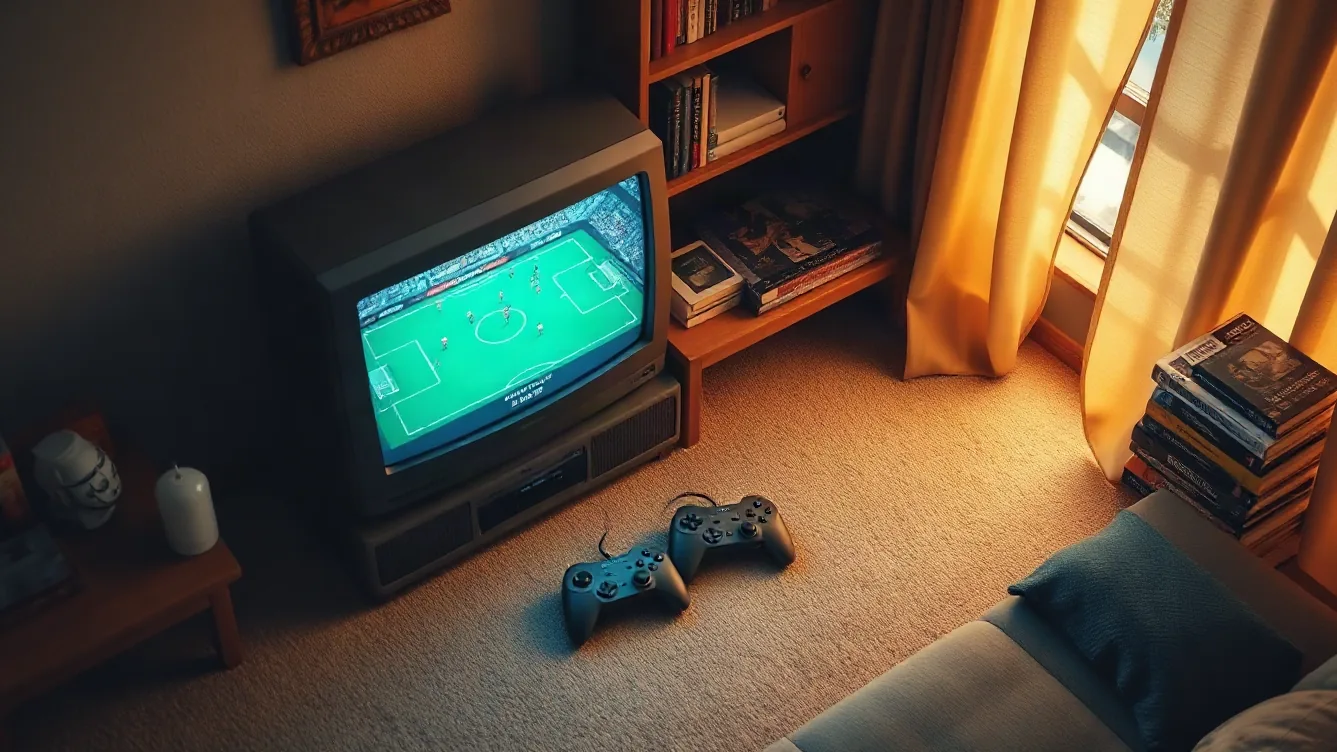
People call the top-down view primitive. I think it's honest. You see the whole shape of the team, and you can spot a run before it happens. The tiny players have no detail, but their movement tells you what you need: a defender stepping out, a midfielder arriving late, a striker peeling wide. The game gives you enough information to make a decision, and not so much that you get lost in animation.
That clarity keeps matches close. You rarely lose to a wonder goal out of nowhere. You lose because you left a gap or rushed a pass. The small scale puts the focus on team shape, not one hero player. Good antidote to football games that feel like a highlight reel with a scoreboard bolted on.
A good pass in Sensible Soccer feels like a small argument won.
The career mode that ate my evenings
Sensible World of Soccer added a career mode people still talk about, and for good reason. You took a club through seasons, bought players, and the whole thing turned into a little management game. This wasn't a friendly with a nicer menu. Transfers and the league table gave every fixture some weight.
That mode is part of why the game lasted. You'd play a quick match with a mate, then spend an evening plotting a promotion push. The football was fast and arcadey, the career gave it a story. I still think that mix is underused. Modern football games have more detail, but they bury the simple joy of a quick passing move under menus and cutscenes.
Mistakes I see from new players
New players often try to play it like a modern football game. They sprint everywhere, hold the shoot button, and wait for the ball to stick. You can guess how that ends: a lot of running into dead ends. Sensible Soccer rewards a calmer rhythm. Move the ball, move into space, then move again.
A few traps to avoid:
- Don't hold the button too long. A short press is usually enough.
- Don't ignore aftertouch. It isn't a bonus trick, it's part of the controls.
- Don't chase every ball with the nearest player. Sometimes holding shape is the better move.
- Try not to think of the tiny players as stats on a screen. Position and momentum matter more than names.
Give yourself time. It's fast, but the decisions are simple once you stop panicking. A calm player beats a quick one who is always fighting the ball.
Playing it today without the fuss
You can still play Sensible Soccer without turning the spare room into a museum. There have been official reissues and compilations over the years, and if you own the original it's not hard to find in emulated form. Original hardware is the nicer option for me. A real joystick and a CRT make the speed feel right. It also means the usual retro headaches: tired disks, dirty cartridge contacts, joysticks that have seen one too many tackles.
If you're buying loose copies, check the condition before you pay collector prices. Sports games were made in huge numbers, so most common versions shouldn't cost a fortune. Our guide to cheap sports games is a good reminder that the bargains are still out there. On cartridge systems a clean set of contacts can bring a dead game back, and our piece on cleaning and restoring cartridges covers the basics without the snake oil.
The bigger point: Sensible Soccer doesn't need a remaster. The speed, the loose ball and the aftertouch still work. It's a game you pick up in a minute and you're still learning a month later. Nostalgia has nothing to do with why it matters; the design is tight. Few football games have done so much with so little.
Retro gamer and collector who has been playing sports games since the Mega Drive days.