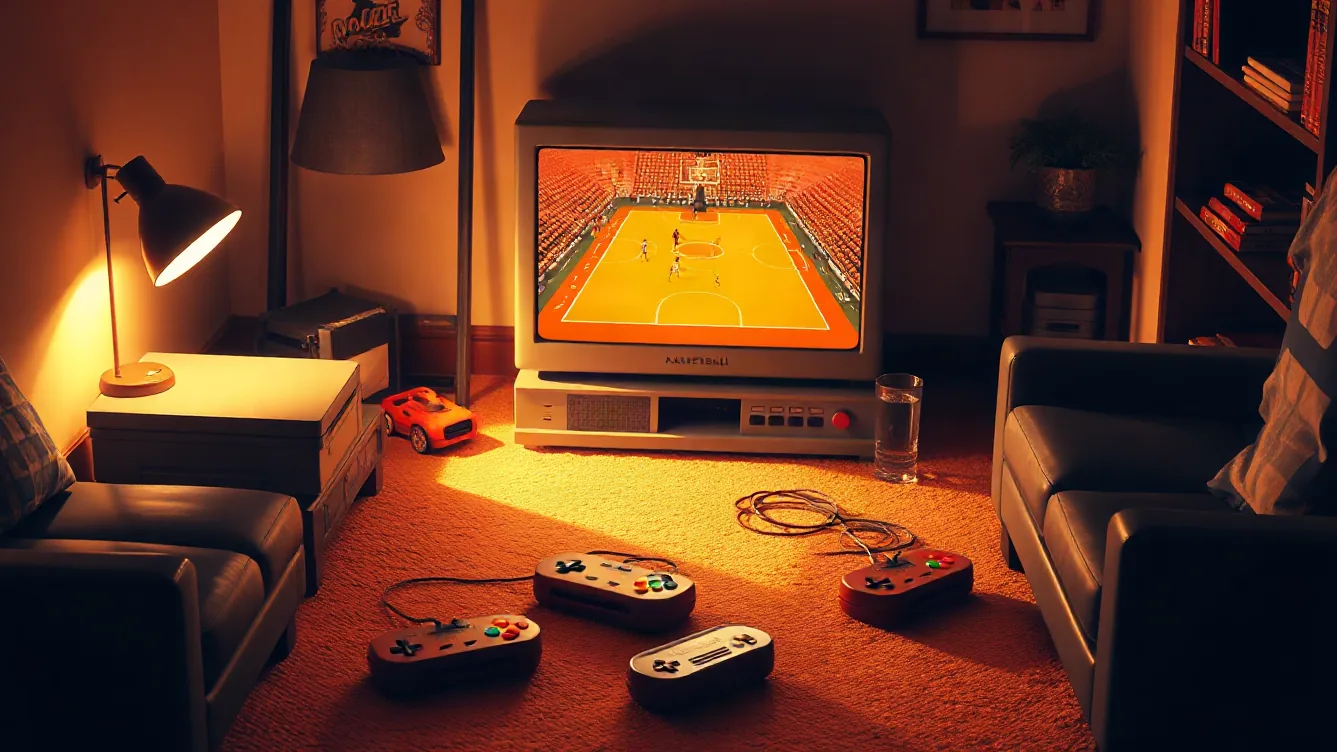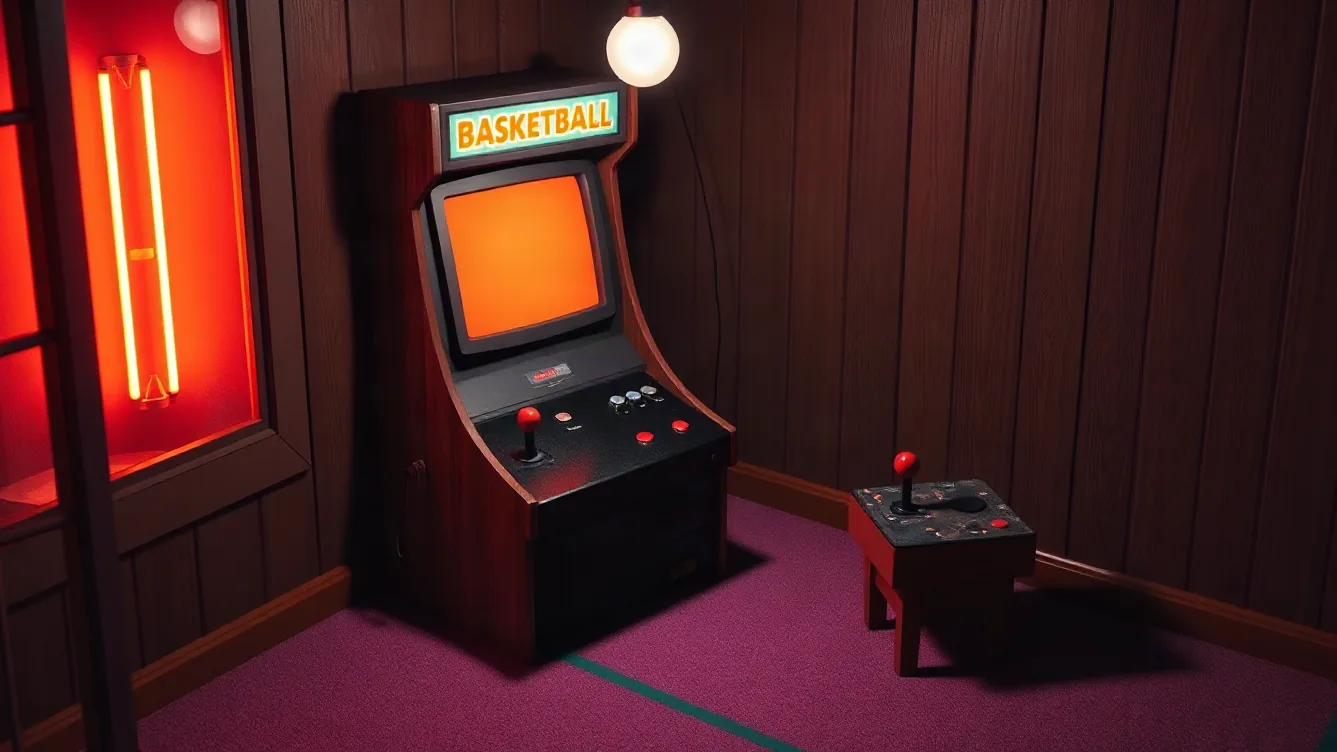
The first time I saw someone dunk from the three-point line in NBA Jam, I laughed out loud in a public arcade. That was the whole pitch, really. Our local cabinet sat between a pinball table and the change machine, and there was always a queue behind it. Years later a friend told me NBA Hangtime was the better game. We settled it the only way two stubborn people can: a long weekend, two controllers and a lot of arguing.
He was right about some of it. So was I. Both games come from the same Midway arcade line, and both do the same basic thing: two-on-two basketball with turbo, ridiculous dunks and a hot-streak system that turns an ordinary jump shot into a fireworks show. Play one for ten seconds and the other will feel familiar.
What each game actually is
NBA Jam hit arcades in 1993 and then went everywhere, which is why plenty of people remember it from a SNES or a Genesis rather than a cabinet. Tournament Edition came next and tightened the formula, and that is the version most collectors mean when they say Jam. It is fast, loud and deliberately stupid in the best way.
NBA Hangtime turned up in arcades in 1996 on newer hardware, with the same two-on-two core and a longer list of tricks. It also got an N64 home port that plenty of players still defend fiercely. Put both games on the same TV and the family resemblance is obvious.
Arcade hardware matters more than people expect. Cabinet versions run on boards built for that specific game, and home ports trim things to fit the console. Most of us played the trimmed version first, so standing at a real cabinet can feel surprisingly loud and quick.
The dunk button is the whole argument
Jam is built around momentum. You push the tempo, you dunk from spots that would get a real coach fired, and the turbo meter keeps you honest. The CPU cheats and everyone knows it, which is part of the charm. When a player catches fire, the whole room seems to get louder.
Jam is the game you play to laugh. Hangtime is the game you play to win.
That is the split for me. Jam has a rhythm that rewards showing off. Hangtime asks you to think more about spacing, because there are more ways to finish a possession and the defense punishes lazy turbo use.
Hangtime's extra layers
The additions are the reason some players never went back:
None of that would matter if the ball felt wrong, but it doesn't. Hangtime runs a touch slower, and the pace suits the extra options.
Where Jam still wins
Jam is easier to hand to someone who has never played it. No create-a-player screen, no alley-oop timing to learn, just turbo and the dunk button. It also landed on nearly every platform of its era, so cheap copies turn up constantly at car boot sales and flea markets.
The other thing Jam has going for it is that the first minute sells the game. Hangtime asks for a few credits before it clicks.
Playing them today
A few things I have picked up from buying these secondhand:
That last point matters more than people think. A dirty cartridge with a shaky connection is the quickest way to decide a game is broken when it is only grubby. There is a decent walkthrough for that sort of job in this piece on cleaning and restoring cartridges, and it has saved a few of my own purchases.
The same habits carry over to most arcade sports games from that era. If the pace here appeals, the best retro soccer games for beginners scratch a similar itch with a different ball.
The one I would keep
If I had to keep a single cartridge, it would be Hangtime, because the extra options give it more to chew on after a decade of playing. That is a collector's answer, though, and collectors get sentimental about depth. The honest one is that Jam is the game I still drop into for five minutes, and five minutes is usually how these things start.
Retro gamer and collector who has been playing sports games since the Mega Drive days.